
How we Started
In the May 2025 local elections, a small group in Cottage Grove—the Blackberry Pie Society—tested a simple idea: what if we stopped focusing on partisan messaging, running siloed campaigns, and ran one community campaign instead
They formed a PAC to support a unified slate of four candidates and brought in a young but experienced campaigner to help align the message, field, and finance. The slate was intentionally diverse: a Democrat, a Republican, an Independent, and a Non‑Affiliated voter. Instead of campaigning on party labels or national talking points, they focused on the job of a school board: recruiting and retaining teachers, fixing aging buildings, and helping students succeed.
The Plan
One campaign, four candidates: shared training, shared volunteer pool, shared calendar.
Shared message: each candidate brought a different perspective, but they were focused on solving the same issue.
Shared advertising: a single mail and digital plan that introduced the slate as pragmatic problem‑solvers.
Shared field campaign: volunteers from each candidate were pooled and effectively canvassed for all 4 candidates at once
Opponents leaned into national culture‑war rhetoric—book bans, performative outrage, and divisive narratives with no connection to the work of a school board. The slate refused to take the bait. We kept it local, practical, and respectful.
The Result
In a region where extremists had recalled city councilors and punished moderation, the Cottage Grove slate flipped the school board from extremist control to common‑sense governance.
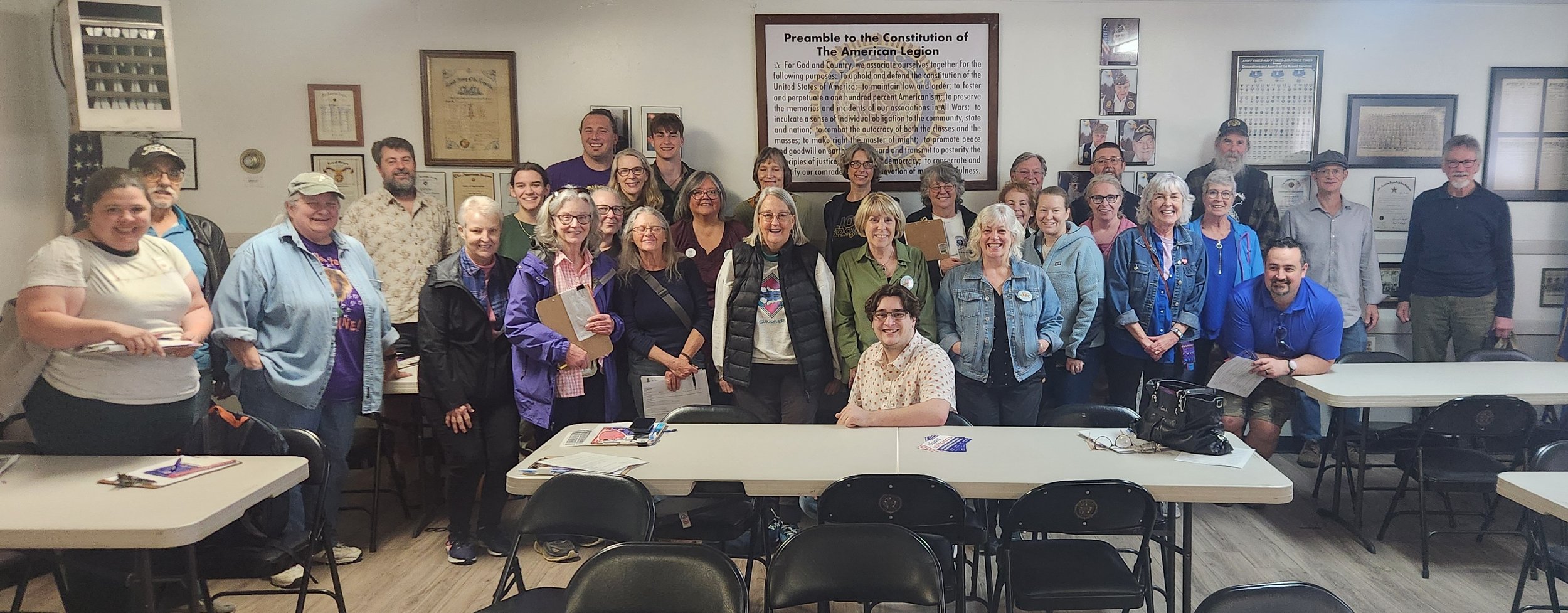
The first canvass launch of the campaign. 30+ people showed up to stop extremism in Cottage Grove
What We Learned
Local beats loud. When you center real local needs, voters respond—even across party lines.
Efficiency wins races. Pooling resources meant more doors knocked, better training, and cleaner execution.
Problem solving > party labels. Neighbors can disagree on ideology and still govern together.
Scaling the Model
The same model spread across Southwest Oregon that election. Local organizers recruited community‑rooted, solutions‑oriented candidates—regardless of party—and ran unified, solutions-oriented campaigns. Common‑sense slates won at Southwestern Oregon Community College and in the Coos Bay, North Bend, and Siuslaw school boards.
From Pilot to PAC
That proof‑of‑concept became Oregonize to Win. We exist to train, equip, and oregonize local leaders to win where it matters most:
Local first: talk about the issues the community is facingnot national partisan BS.
Shared values over labels: focus on schools, safety, and services—not clickbait.
Right‑sized support: deliver just‑in‑time training, tools, and targeted communications.
We started with four neighbors and a simple premise: when campaigns put community over partisanship and work together, Oregon wins.